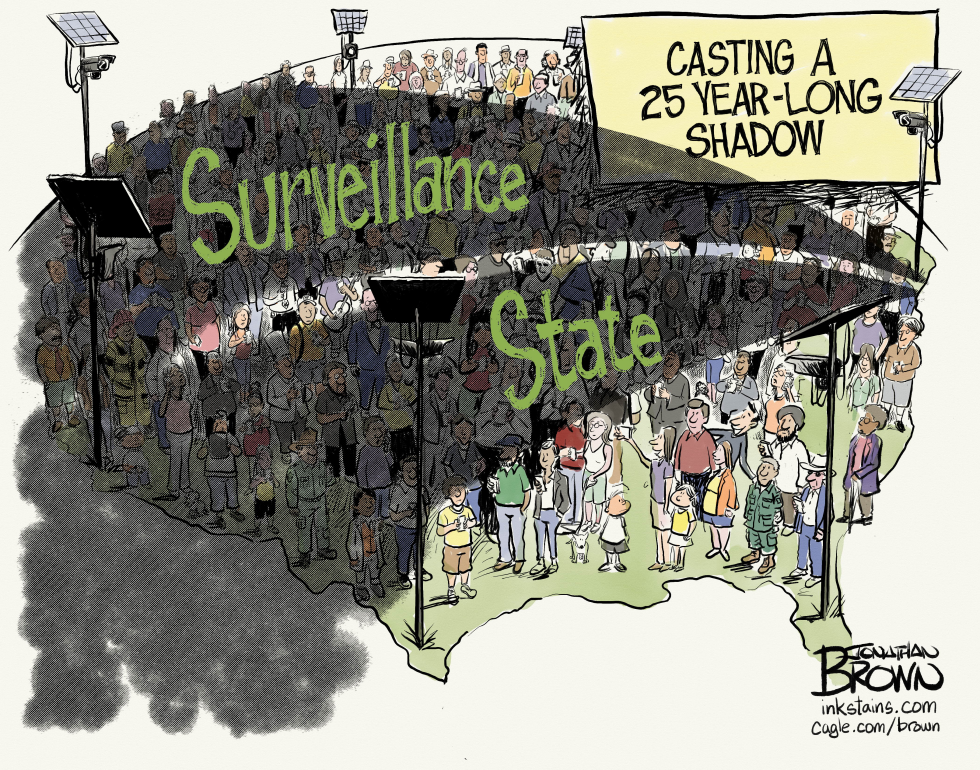
The cartoon depicts a dense crowd of Americans standing on a map of the United States, partially obscured by a large dark shadow cast by surveillance cameras mounted on poles. The words 'Surveillance State' appear prominently in green lettering across the scene, while a sign in the upper right reads 'CASTING A 25 YEAR-LONG SHADOW.' The image comments on the lasting effects of expanded government surveillance programs that began after the September 11 attacks, now spanning a quarter century. It illustrates how these measures continue to influence daily life and public spaces in 2026.
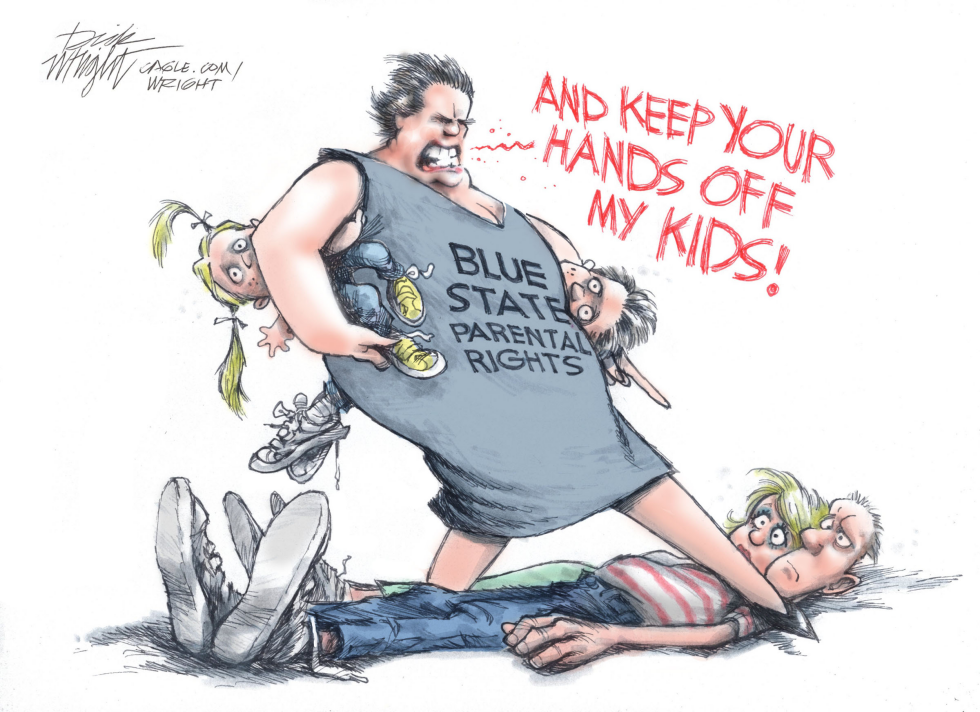
Blue state governments have expanded authority over child welfare and education decisions in recent years, often overriding parental objections on issues like curriculum and medical choices. This has sparked lawsuits and protests from families arguing loss of rights. The cartoon portrays these policies as aggressive state takeover rather than protection, criticizing the shift of power from parents to officials.
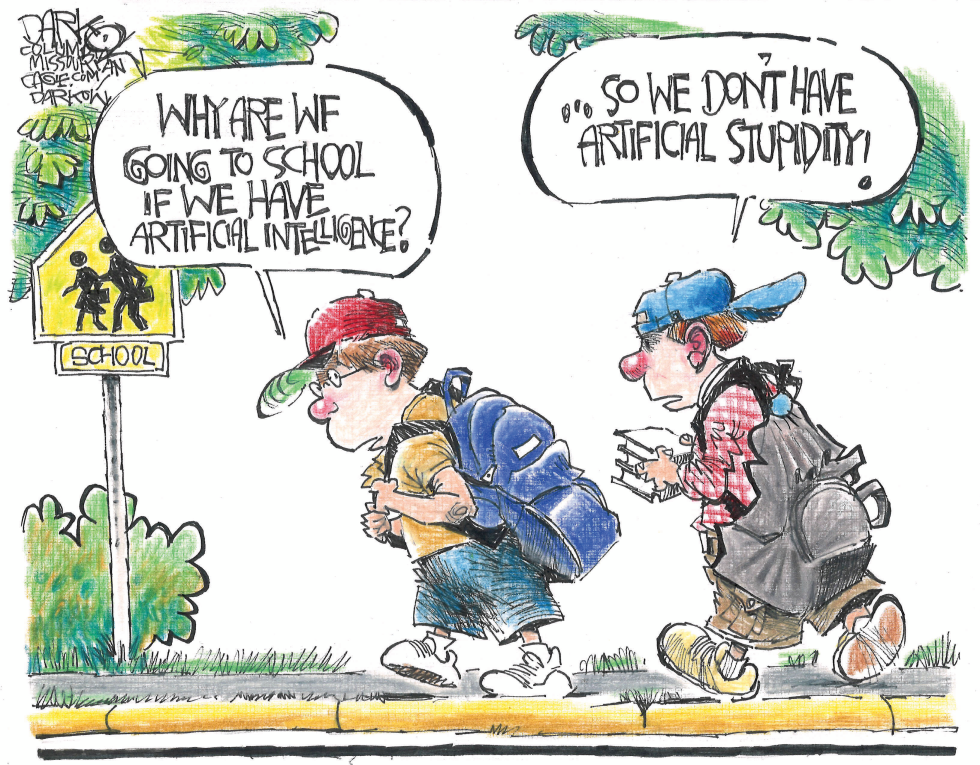
By 2026, rapid advances in artificial intelligence have prompted widespread questions about the ongoing role of traditional schooling. Students and educators alike wonder whether classroom learning retains value when AI tools can supply instant answers and assistance. The debate centers on whether reliance on AI risks producing graduates lacking critical thinking skills. Without structured education, society could face a generation marked by artificial stupidity rather than genuine understanding. The piece argues that schools remain necessary to build real intelligence and avoid that outcome.
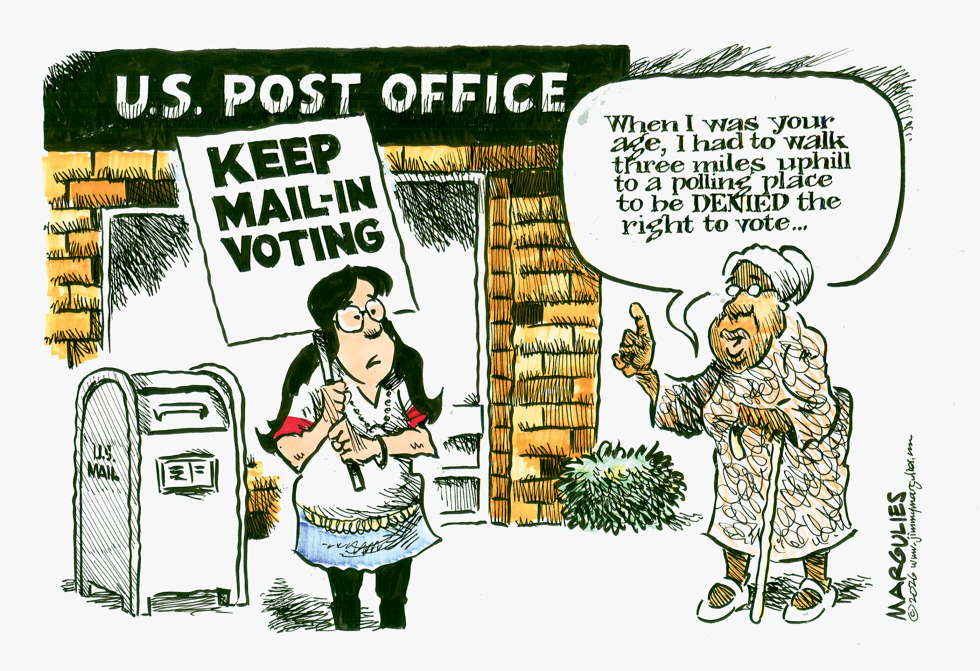
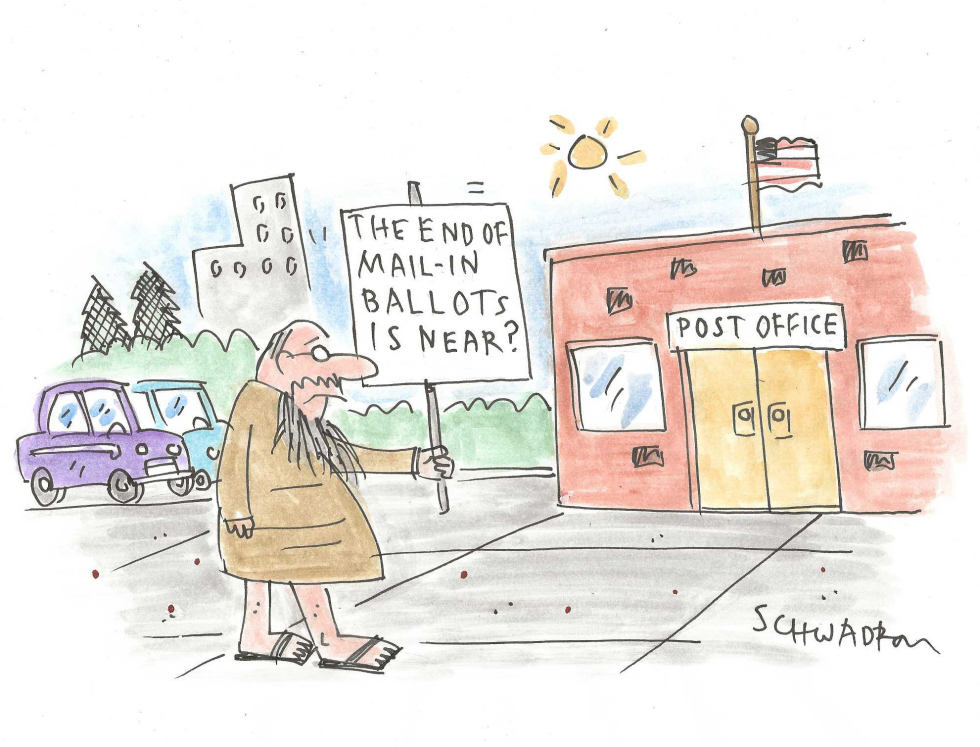
A protest sign at a U.S. Post Office calls for an end to mail-in voting. The cartoon responds to ongoing state-level efforts to restrict mail ballots after expanded use in recent elections. Such limits disproportionately affect older voters and those with mobility issues who previously faced physical barriers at polling places. The piece argues that rolling back mail-in options revives the very obstacles elderly citizens once endured, undermining broader access to the ballot.
Proposals to restrict or end mail-in ballots have gained traction in several states ahead of upcoming elections, prompting concerns from voting rights advocates about reduced access for elderly, rural, and disabled voters. The post office has long served as a key conduit for absentee ballots. Critics argue the changes prioritize unproven fraud concerns over convenience and turnout. Supporters say tighter rules restore confidence in results. The cartoon frames the debate as an abrupt shift that could sideline a proven voting method.
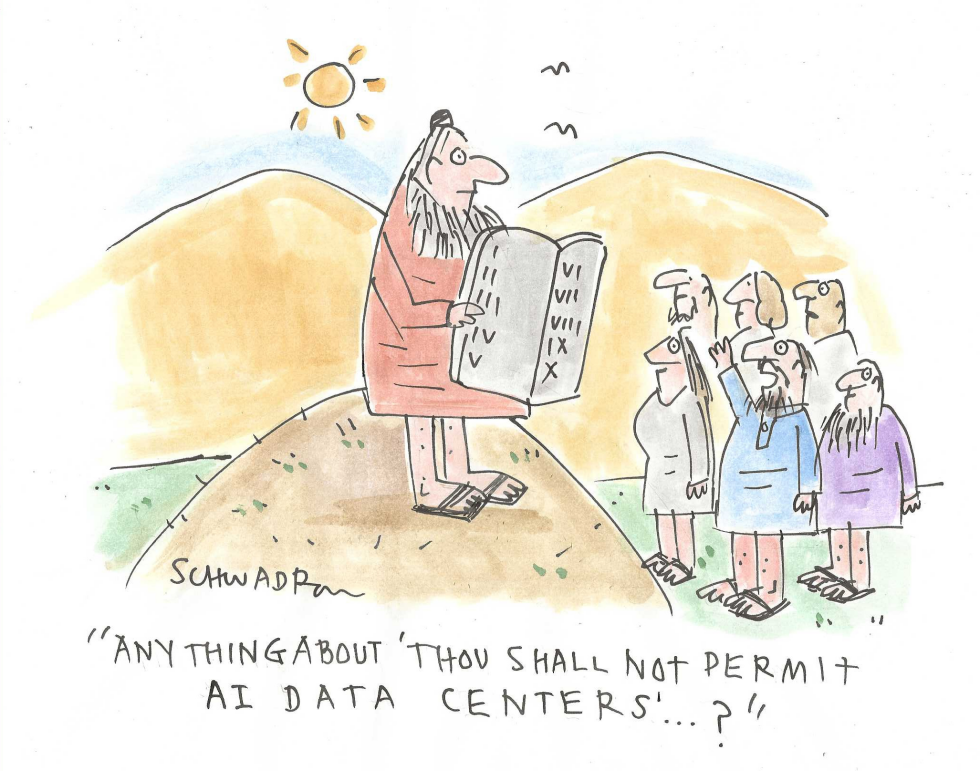
AI data centers face growing regulatory scrutiny over energy use and land impact in 2026. Lawmakers weigh new permitting standards as facilities expand rapidly. The cartoon uses the Moses figure to highlight the absence of explicit restrictions in foundational rules. It suggests modern governance struggles to apply old frameworks to new infrastructure demands. The editorial stance favors clearer limits on data center approvals.
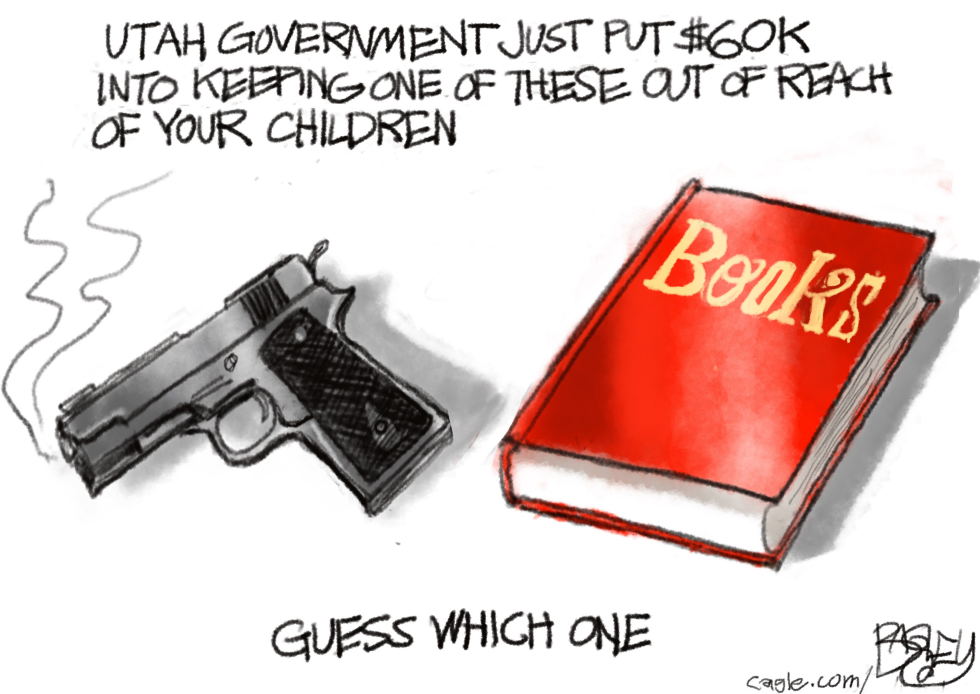
Utah officials directed $60,000 toward measures keeping certain books from children. Firearms remain readily available in the state. The decision highlights priorities in public safety and education policy. The piece criticizes the allocation as misplaced emphasis on censorship instead of addressing gun risks.
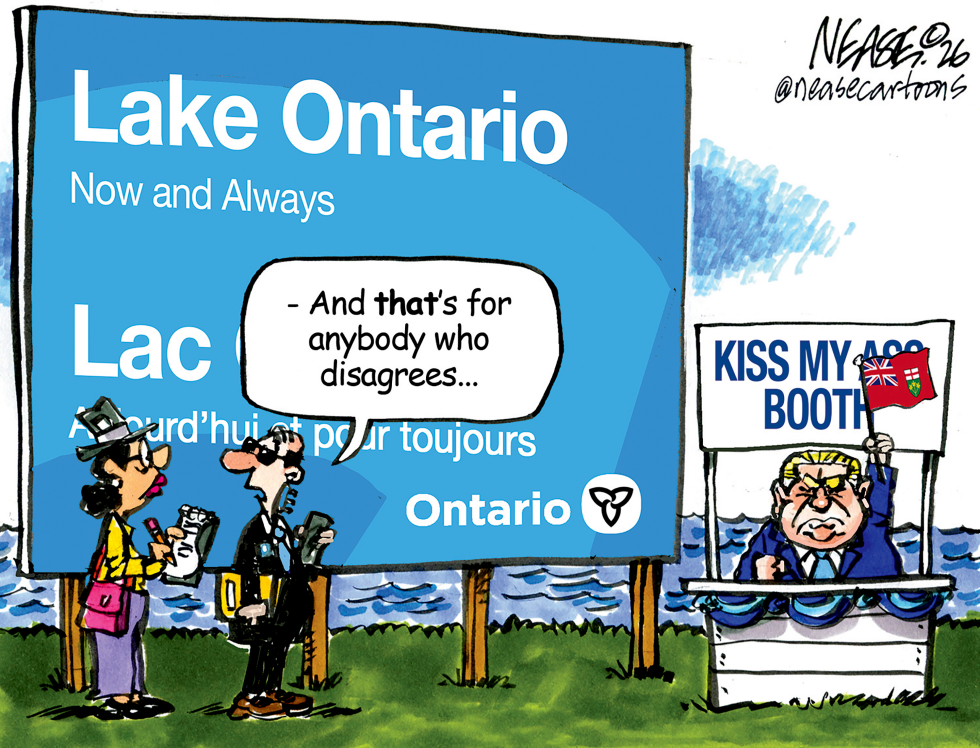
Ontario Premier Doug Ford has set up a protest booth opposing a bilingual sign for Lake Ontario that includes French wording. The move comes amid ongoing debates over language policy and signage in the province. Ford's action highlights tensions between English-first preferences and official bilingual requirements. The editorial position criticizes the protest as an unnecessary escalation that distracts from practical governance.
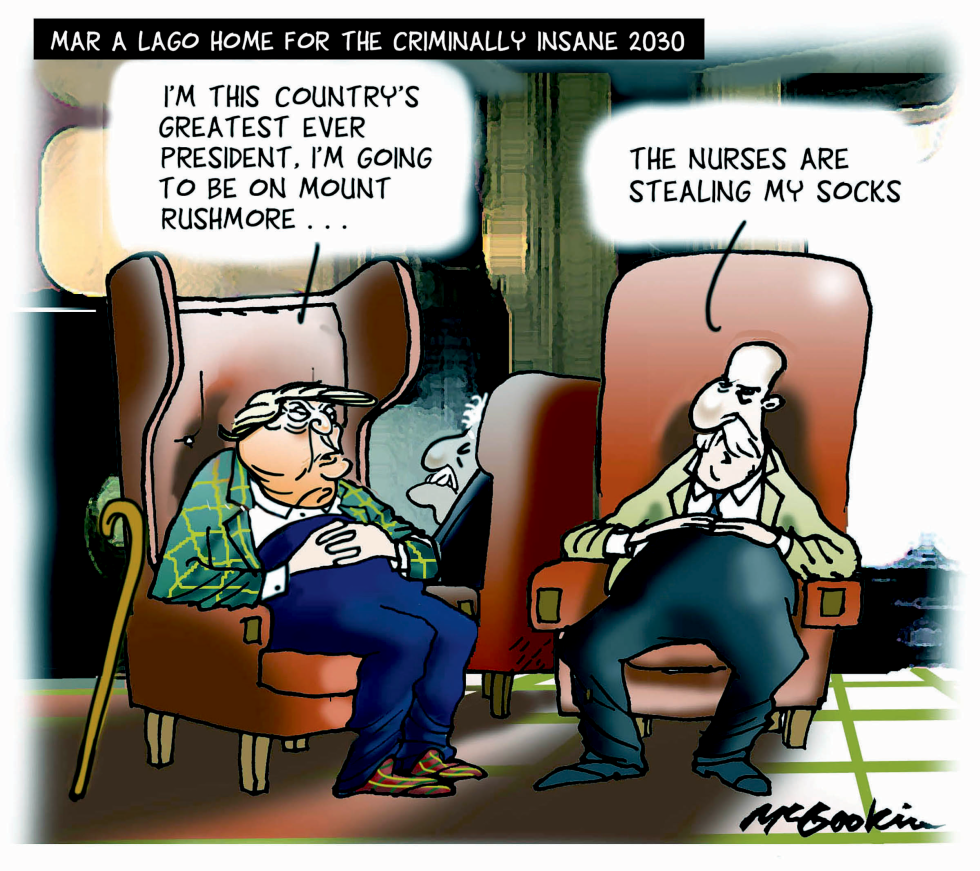
Donald Trump asserts he remains the nation's greatest president and belongs on Mount Rushmore while confined in a 2030 Mar-a-Lago facility for the criminally insane. A fellow resident counters with claims that nurses steal his socks. The piece frames both statements as equivalent delusions, underscoring the cartoon's view that Trump's self-aggrandizing rhetoric has crossed into clinical territory.
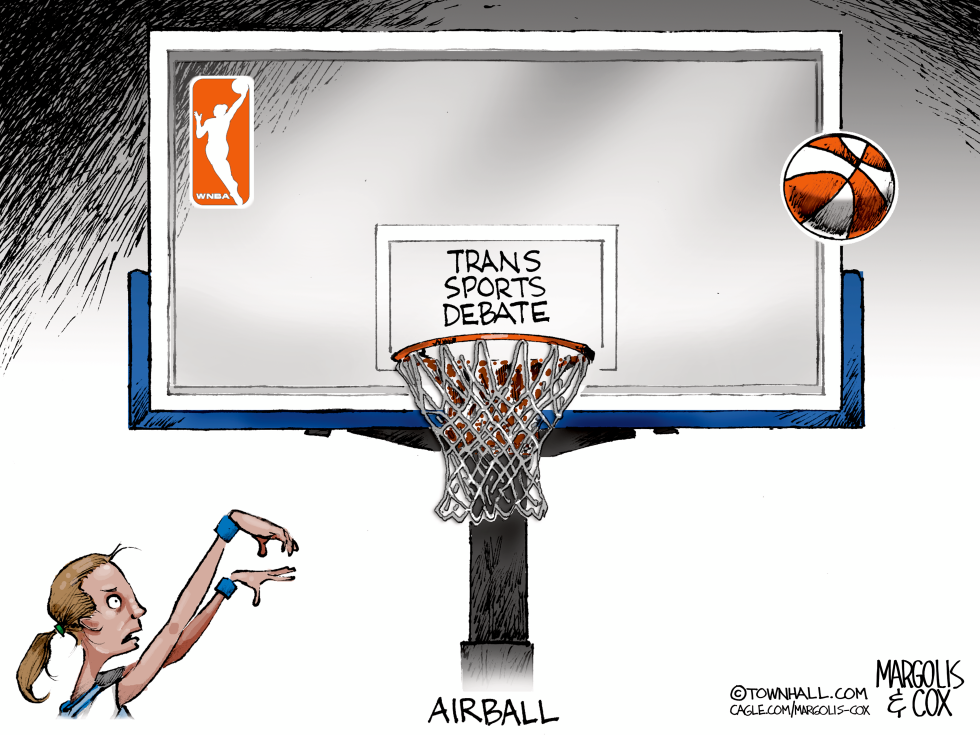
The WNBA has drawn criticism for its handling of transgender participation in women's sports amid ongoing policy debates. A recent cartoon uses a basketball airball metaphor to highlight the league's perceived avoidance of the issue. The piece argues the organization is failing to address fairness concerns raised by athletes and fans. Critics say the league prioritizes other messaging over resolving competitive equity questions in women's basketball.
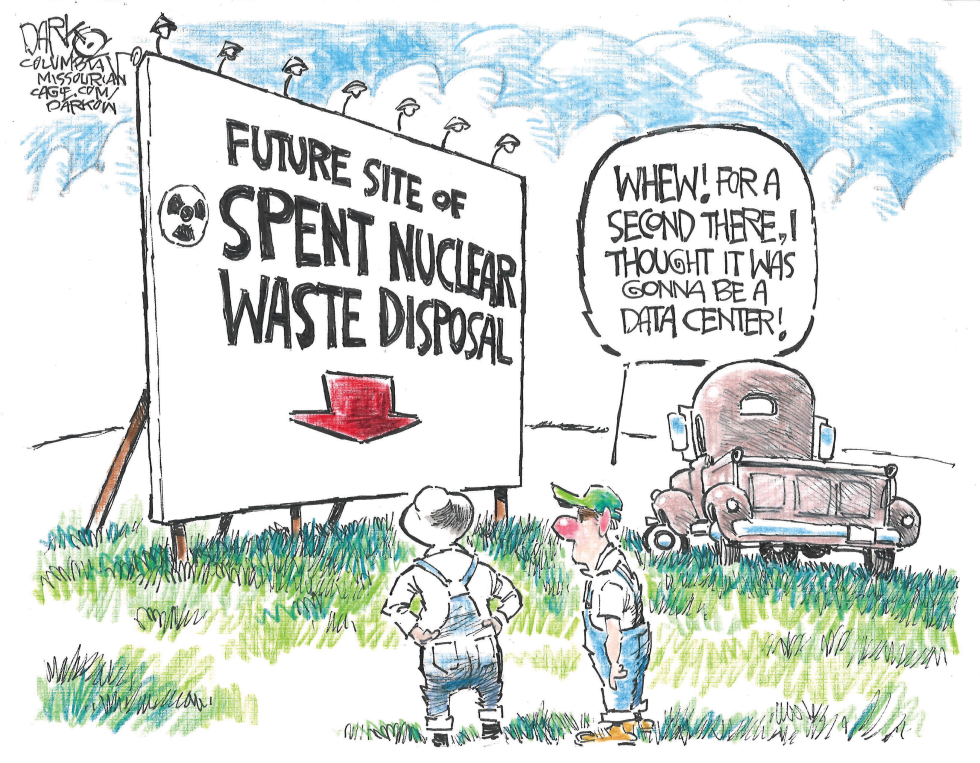
Rural communities continue to face competing proposals for large-scale projects on agricultural land. A planned spent nuclear waste disposal facility draws attention as residents weigh it against potential data center developments that often bring high energy demands and infrastructure changes. The editorial takes the position that such choices reflect broader tensions in siting energy-related facilities versus technology operations in farming areas.
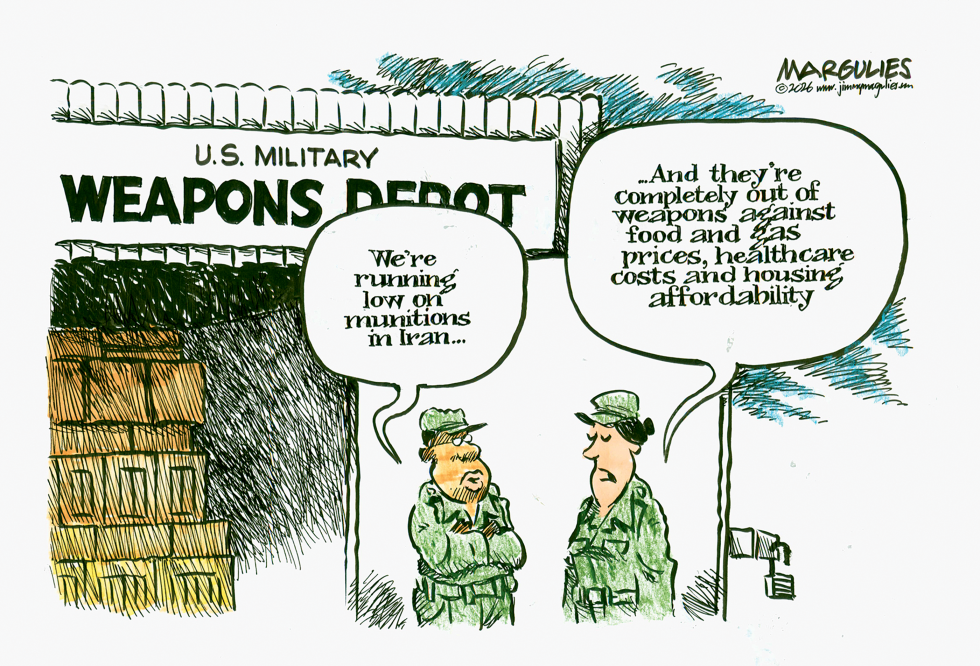
The cartoon depicts two U.S. soldiers outside a weapons depot labeled U.S. Military Weapons Depot. One soldier states the facility is running low on munitions in Iran. The second replies that domestic fronts are out of weapons against food and gas prices, healthcare costs and housing affordability. The image responds to ongoing debates over U.S. military aid commitments abroad and competing budget pressures at home as of the August 2026 publication date. It uses the depot setting and dialogue to contrast foreign military demands with economic challenges facing American households.
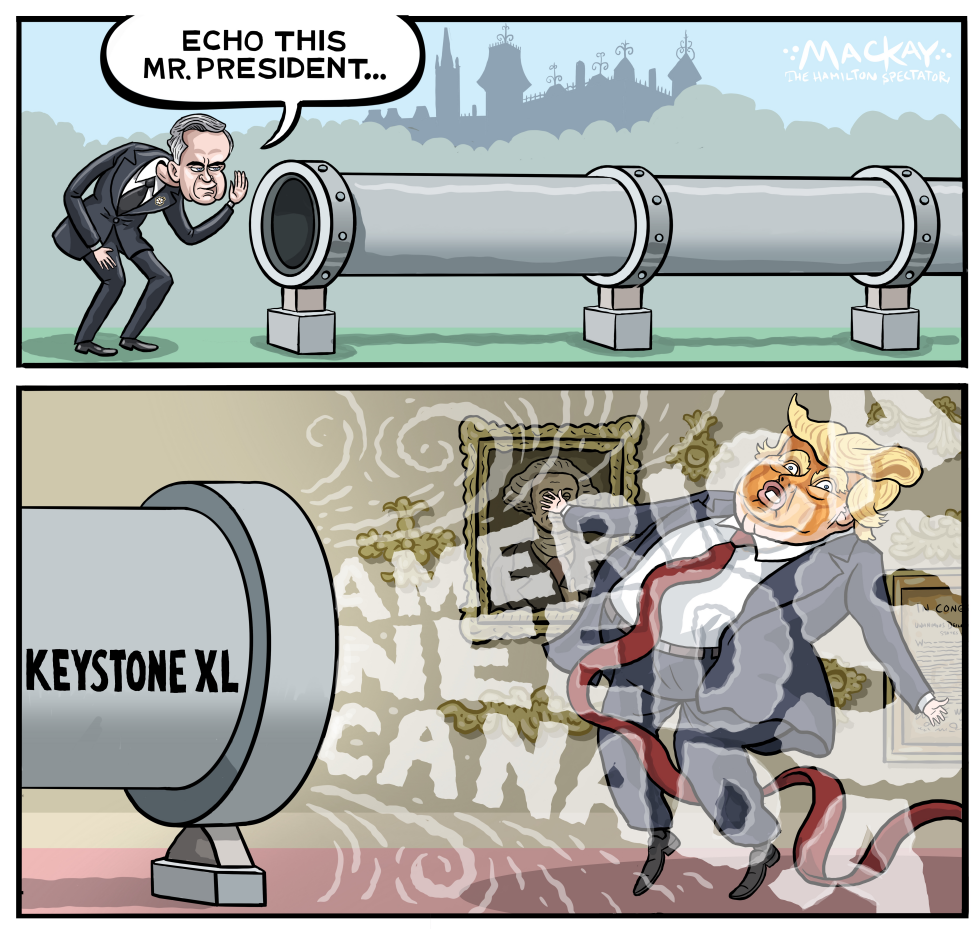
The Keystone XL pipeline project faces renewed scrutiny in 2026 as echoes of prior administration policies surface in energy and trade discussions. Officials reference past directives on cross border infrastructure while current stakeholders weigh environmental and economic impacts. The piece argues that the project continues to reflect lingering influence from earlier presidential priorities on fossil fuel development and international relations.
The cartoon depicts a mother and son in a domestic setting where the son defends his use of vulgar language by citing the president's public example. The speech bubble from the son questions why he cannot use obscenities if the nation's leader does so without consequence. The scene includes household details such as a tablet in the mother's hands and mechanical parts on the wall. The argument highlights ongoing debates about language standards in public life and their influence on younger generations. The cartoon responds to recent discussions about presidential rhetoric and its broader societal effects.
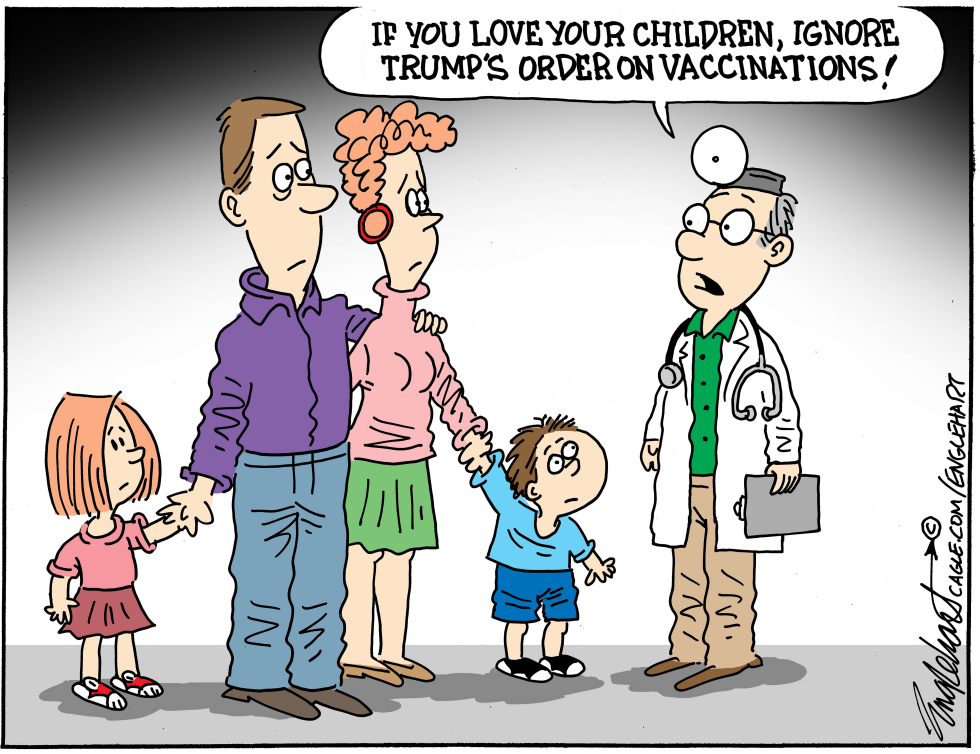
A doctor has publicly advised parents to disregard a presidential order on childhood vaccinations. The recommendation comes as the Trump administration advances new immunization policies. The stance highlights tensions between federal health directives and medical advice given directly to families. The piece presents the doctor's counsel as protective of children and critical of the order's approach.